Fabric & Tile Masters
CALL TODAY 221-9550
1 Icon Hour Response 24 Icon Hour Service

Blog

Hone Finish Stone Floor

We are often called on to refinish stone flooring. One of the simplest and most effective ways to return a floor to its natural look is by using abrasive honing powder or honing brushes. We typically follow this procedure with a sealer application. This article pertains to stone that is hone finish to begin with. If your stone is polish finish, quit reading now, unless you wish to have the floor changed from polish to hone, and some of this will apply.

Interestingly, the honing powder we use is a byproduct the stone milling process. As the stone goes through the saws, the resulting powder is made into honing powder. The powder is distributed in different grits, like 120, 180 or 330 grit.

During the instillation of the floor (sometimes years earlier) a couple of things happen that can effect the floor for years to come. Typically an installer will leave a slight amount of grout residue on the surface of the tiles. This grout is never removed, and may be barely visible. The installer may also pre-seal the tiles (to help him remove the grout residue) or will seal the floor after the installation. This sealer is often applied improperly.

A stone floor will be mopped we are assuming with a neutral stone cleaner. Soils and the cleaner residue are also removed during the honing process.

As far as scratches are concerned, honing powder will remove many of them, but deep scratches, like those that are visible after a piece of furniture is dragged over the floor, will not be removed. These will require using abrasive diamond disks. This is a far more involved procedure. Please see the section of this blog on grinding floors that demonstrates the abrasive disks. (This post shows a floor with excessive lippage that had to be ground flat before honing.) But the light scratches from moderate foot traffic can be removed completely with honing powder, using the procedure we are describing.

Low pH etch marks (the ones that look like water marks that you cant clean off) can be removed in some cases, but like the scratches above, if a particularly strong chemical leaves a deep etch mark, deeper abrasive action will be necessary.

So the goal in honing a floor using honing powder or brushes is to remove: fugitive sealer residue, any grout haze, soil and mop water build up, and light acid etch marks and scratches.

Terrazzo Refinishing

Terrazzo is a floor that is a combination of poured portland cement (sometimes colored) and marble chips. The portland is referred to as matrix. The mixture is poured into a metal grid. This T shaped grid will act as an expansion joint, give the installer a guide to pour to, and provides a limit to the mixtures flow. There is also an epoxy terrazzo, as well as precast terrazzo tiles.

We see terrazzo in older homes and businesses. These floors have been forgotten for years, many times covered with carpet or vinyl.

The carpet installations often require repair to the edges where tackless are nailed/drilled into the terrazzo. These can be filled with a close match nonsanded caulk, or kits are available that match the marble chips and colored matrix.

Vinyl installed on terrazzo is always the worst situation, because the adhesive in the vinyl pulls the marble chips form the terrazzo, effectively ruining it.

If a customer wishes to have terrazzo restored, the following steps need to be taken:

  • Any waxes, topical sealers or acrylic floor finishes must be removed. There will be a time in the instillation wwhen resin bonds will be used to remove scratches and eventually polish the terrazzo. These diamonds will nto work when these sealers are present, so they will have to be removed. Use appropriate strippers.
  • Any cracks or edge repairs will need to be completed before the refinishing.
  • Stains will have to be evaluated and either removed or excluded from the estimate. Some stains will be deep after years of leaking appliances or wall removal.

After these steps are completed, scratch removal will begin. This will start with a grit low enough to remove the scratches, much like the process to refinish a stone floor.

After the grit progression (ex. 120, 200, 400) the floor will be polished with a suitable polishing compound. We use a dry polishing process using the MB 12 product (available from MB Stone)

There has to be a discussion with the customer, usually very early in the process about their level of commitment to the project, and the available budget. A properly refinished terrazzo is a beautiful finish, but with cost of tiles at $.49 a sq ft, the cost of installing tile will be less than refinishing the terrazzo. With a cost of around $4-6 a sq ft, (depending on the scratch depth and desired finish) the customer will have to be really excited about and committed to the possibility the terrazzo represents.

The result that can be achieved is stunning. Good luck with your terrazzo.

Drapery Cleaning – Location & Care Tips

Why would anyone ever clean draperies as they hang in your house? A better question might be, why would you ever send them out to a dry cleaner?

In all my years as a cleaner rehanging drapers that have been dry cleaned, I have never seen a single time when they were cleaned in a plant when they didn’t shrink. Draperies are made of natural fibers in most homes we work in. If you goggle up drapery fabrics, you will find some rayon/poly blends, but 90% are silk and cotton. When these two fibers are exposed to moisture they will shrink. The second reason they need to be cleaned in your home is that the ceiling treatments can not be taken down. They are permanent and are not made to be removed. In many cases they are stapled to cornice boards. Draperies are often folded in elaborate patterns that no one will be able to duplicate once removed.

The best way to keep draperies looking great is to periodically vacuum them pleat by pleat. You will need three items to complete this task:

  1. A vacuum with that has a moderate amount of suction that will remove the dust without disturbing the pleating
  2. An attachment that will allow the drapes to be vacuumed without pulling them into the vacuum hose
  3. A safe step ladder. If you have these tools, you are prepared to remove the dust that is the biggest source of soiling on draperies. The dust should release easily unless it is combined with other home environmental residues.

These residues are why you might need a professional cleaner. Cooking oil for example, combined with the previously mentioned dust, create a whole new soil, that wont come out with simple vacuuming.

We clean draperies using two vacuum cleaners. The first is a backpack HEPA filter that removes the bulk of the dust on the draperies. We then apply a mineral spirits based cleaner that suspended the soil. The suspended soil is then extracted. The machine is vented outside. We also use centrifugal blowers to vent the solvent.

The machines we use have the absolute correct pressure because they are specifically designed for drapery cleaning.

New challenges for carpet cleaners: How to clean long neglected white and off-white carpet.

I can’t really remember when the change came (consumer rejection of carpet with colors like green, blue or mauve) to white, off white and beige, but it happened long enough ago that there are very few homes with colored carpet. I have always suspected the reason for favoring neutral tones was that the homeowner could more easily market the house if they had a reason to move. That reason combined with the emergence of “stain resist” wear warranties made white and off white ideal selections. We all know the stain resist warranties work exactly as they were intended, but the problem is the consumer thought stain resistant meant soil resistant. As far as we know there is no soil resistant carpet.

Another factor adding to this maintenance nightmare is the design selection of tile in a substantial portion of many homes as well. Since a large segment of the population don’t remove their shoes at the doorway, the heavy traffic areas formerly found at the entryway have now been moved to the entryway of each bedroom. People are staying home more now to home office or because of retirement. Combine these with the economy of the last couple of years, where professional cleaning is often put off far past the point where it is required, and you have a perfect storm set of challenges facing the cleaner.

These challenges include:

  1. Trying to remove the visible soiling in walk areas, especially the “U” from the master bedroom door to the master bath (which is tile of course).
  2. The desire not to completely strip out the stain resistant feature built into the carpet. Although the stain resist has warranty requirements that are voided after not having the carpet professionally cleaned every 12 months, it seems wrong to just go to a high pH chemical right off the bat that would remove it.

We are a small company and have the luxury of taking the time to pile lift the carpet, apply safe pH cleaner with a cimex, and then extract with a truck mounted cleaning machine. This procedure has always yield fantastic results, but it is getting tougher. We have used a chemspec formula 161 (pH 9 and wool safe) for years and it has provided a good solution. We also meter a neutral pH extraction detergent.

We encourage or homeowners to get rid of the shoes, get more mats, and vacuum like crazy as alternative solutions if they have to put off cleaning. We also tell them it needs to be done more frequently. At some point we are going to ask if they want the carpet clean (with a high pH chemical), or if they want the stain resist component preserved.

Grout Colorsealing

Grout colorsealing is a process in which the grout is coated with a colored sealer. Optimally, when this sealer is applied, the grout is no longer porous. It is coated with a sealer that has dimension, is topical in nature and accomplishes two primary goals: 1- it allows the owner to have the color grout they wish to have 2- it forms a near impenetrable barrier to staining.

The way we accomplish the colorsealer application:

  1. Clean the tile completely with a truck mounted steam cleaner. If the tile is not completely cleaned, the colorsealer may not stay in place
  2. We then apply the sealer with brushes to the grout joint. After the color sealer is applied we press the it into the grout joint, followed by wiping off the excess sealer.
  3. After this we buff excess sealer off, and the floor is ready to be used.

After application is completed the grout is sealed, and is no longer porous. When the tile is mopped, the grout mops just like the tile surface.

The first step in the colorseal process is selecting the color. The colorsealer manufacturers go by the color charts provided by the major grout manufacturing companies. These grout colors are then mixed custom. Generic colors in sample kits can help with your selection.

Colorsealers occasionally develop loose product in some areas. These will need to be maintained in an ongoing basis. An after care plan is a good idea.


On Right: These are some detail before and after colorsealing pictures of a bank we recently did. We cleaned the tile as best we could, but the need for colorsealing was obvious.


during cleaning


result of cleaning is not good


color seal detail


detail color seal


After color sealer applied

Stone Sealers

Stone sealers are necessary sometimes. This is the most definitive statement I can make about them. And the most important for the stone owner to remember.

Consider the following:

Some stone surfaces need no sealer. Using sealer actually will leave a residue that can’t be removed with out a fairly expensive procedure.

Sealers exist to provide a level of water and oil repellence. This is all they do. They don’t keep the surface clean or shiny.

The finish of the stone — hone or polish — will in some cases determine the necessity of a sealer.

Sealers are delivered in either a solvent or a water base.

Sealers are resins disbursed in water or solvent.

An enhance, that brings out the color in a stone, is a sealer.

Application methods of the sealer is as important as the sealer itself.

Occasionally installers will attempt to cover defects with a sealer.

On marble or calcite based stone, no sealer will prevent low pH etching from household acids like vinegar or lime juice.

A crystalizer process that uses steel wool and a carnuba wax combined with an acid is not a sealer and will damage the stone.

If you ask a typical stone retailer the answer about sealer is that all stone must be sealed. They sell sealer.

Sealers will not dry uniformly, and as the sealer dries, the part that dries first will seal the stone and the undried sealer residue will lie on top of the stone.

You should never be able to see a sealer on top of the stone. If you can, and it is a glossy “topical” sealer, you have damaged the stone and will need to use an expensive procedure to remove it.

Acrylic, urethane, waxes and concrete products are unsuitable for stone.

Guest Article: The Truth About Sealers

The Bare Truth about Stone Impregnating-Sealers

November 13, 2008 – An article by Maurizio Bertoli, Director of Education of the ITCS. Reprinted with permission.

The past 12 to 15 years witnessed the birth and phenomenal surge of a type of product for which nobody had ever felt the need for since mankind started to use stone, which means since the stone-age. All of a sudden, the last decade of the twentieth century brought about the awareness that, without it, we could no longer live.

I’m talking about sealers for stone, also more appropriately referred to as “impregnators.”

What happened, that caused this kind of frantic need for something that nobody ever needed before just about overnight?

Ignorance happened!

North America and most Northern European countries (that had no stone culture to speak of) were fascinated by a product that they always admired and craved for, but could never afford. The affordability factor, however, was not as much a cost issue, as it was an issue of lack of the specific craftsmanship necessary to process it. I’m talking about marble, limestone, granite, etc. Up until a couple of generation ago, stone tiles finished in the factory had not even been invented yet, and the slabs were delivered to the fabrication shop right off the gang-saw; that is, neither one of their two faces were calibrated and polished like they are now. It was the fabricator that had to process the surface of one side of the slab, by calibrating it (grinding), honing and polishing! All this without mentioning the machinery and tooling that were available back then! Marble and granite floors were made by using unfinished cuts of stone (the only ones available) that were set directly on the mud bed, then ground and finished on the premises (“grind-in-place” method). And that – all the processing, that is – is the main factor that makes the craftsmen involved understand stone.

New processing techniques in the quarries and manufacturing plants, brought about an impressive reduction of costs, along with the great idea of ready-to-use products, such as polished marble and granite tiles, or almost ready-to-use, such as pre-finished marble and granite slabs.

All of a sudden, the whole world was flooded with such enticing and legendary materials like marble, granite and other stones, which were offered in a way where expertise and craftsmanship were no longer needed (or were they still?) and at prices that were getting more and more affordable.

Buying and selling stuff that’s manufactured in some mysterious way, in some far off factory, doesn’t make anyone any more intelligent about whatever it is that one’s trading. Processing it does. But it’s not the case here, remember?!… All the processing had been done by the factory; all we needed were just plain setters, or contractors that could use a saw and learn how to polish edges; and we could find plenty of them at a dime a dozen!

Installing and cutting material that was made ready-to-use in some mysterious way, in some far off factory doesn’t make anybody anymore intelligent about such material, does it? Once again, only processing does. That’s why stone restoration / refinishing is the very pinnacle of all stone related activities: It’s the only one that actually processes the stone! And to do that, one must know stone.


Are we beginning to get the picture? If you add to the mix the huge number of “new” stones that all of a sudden started appearing on the marketplace from all corners of the planet (and counting), and the almost total lack of self-regulation of the stone industry, which has been desperately trying to “keep things simple” with the consequence being that the situation is so confusing that nobody knows what actual stone one’s looking at, you have a big melting pot where only one ingredient is brewing: Ignorance. And to the best of my knowledge, nothing intelligent ever came out from it.

Without knowing which one stone was good for what, and without any official guidance, wrong choices and specifications became the rule, rather than the exception (the exception, in fact, was a strike of pure luck in many instances), and problems of an unknown nature started springing up from all over the place, and still counting, of course!

A solution was badly needed. But, alas, with the benefit of a precious few exceptions, the importers/distributors don’t know the first thing about stone. The fabricators are just about there themselves, since they get their stone “education” from salesmen and invoices. And the setters? What on earth have they got to do with stone knowledge? They only install it! What about the original producers? Well, quarry owners/operators usually know their own stone, period. So, if for instance you’re considering a marble quarry and processing plant, and you go back to the owners and question them why their marble “stains” so easily when it’s installed, say, in a kitchen, all they could honestly do would be to break the news that’s the wrong material for the wrong application, but such a “solution” – the only sensible one — would certainly not be satisfactory, would it? It would mean going back to school and learn something about stone, and nobody has time for that! Something “better” and “easier” was needed!


It is the general perception that when a material turns out to be delicate and difficult to maintain, it needs to be “sealed”. The picture that most people have in their mind about a sealer and its expected performance is of some sort of “cocoon” that envelops the item to be preserved and protected, and turns it into an enjoyable, bulletproof material. With this picture in their minds, the major operators of the stone trade started soliciting chemists from all over the planet to find a sealer for stone that would solve all problems and could make them go away without stone knowledge. Of course the chemists – who don’t know the first thing about petrography – started out by asking the BIG QUESTION: “What seems to be the problem?” The answer came in like a unanimous choir: “STAINING!” Hearing that, off they went to work to solve a problem that they perceived as related to absorbency, due to the natural porosity inherent of all dimensional stones.

And “The-miracle-in-a-bottle” made its trumpeted appearance on the international scene of the stone industry, and in a very short period of time became the “necessity” and what I consider one of the most overrated, over-promoted and over-applied (not to mention ill-applied) products in mankind’s history! A domestic company – one of the pioneers of the bottled solution – even called itself “Miracle” to anticipate what one could expect from their “one-medicine-cure-all” product!

Did it work?

When something sounds too good to be true, it usually is. What’s more, no matter how you slice it, there’s no substitute for true knowledge and professionalism. The much heralded “miracle-in-a-bottle” was not to be an exception!

The was majority of the problems related to stone were stemming from their wrong specification, in part due to sheer ignorance about the real nature (geological classification) of the stone itself, and in part due to the total hostility at listening to reason displayed by all too many specifiers. No canned “solution” will ever be able to overcome that!


So then, are all these sealers (impregnators) nothing but a bunch of useless marketing gimmicks?

No, they are not. But before we go any further, let’s try to understand what a sealer for stone is, how it works and what kind of protection it offers.

For starters, impregnating sealers are two-part products: one is the carrier, which could be mineral solvent or just plain water, while the other part is the solid, a resin of sort that will do the actual sealing. The most popular resins are silicone, silane, siloxane, ester epoxy, fluorocarbon alphatic (a.k.a. fluorochemicals). Currently, the latter are recognized as the best and longer-lasting performers, plus they are the easier to make in a formulation that can be carried by water, thus eliminating the use of volatile and hazardous mineral solvent.

Second and very important, is the fact that sealers for stone are not topical products like any other sealer people are familiar with. In fact, they are below-the-surface sealers. The first implication of this is the fact that a sealer for stone will not offer any protection to the surface of the stone itself from wear and tear or chemical attacks. The second implication is the fact that a sealer for stone will not alter in any way, shape or form the original finish on the stone surface that was either produced by the factory, or by a stone refinishing contractor. The most important phase of the application of a sealer for stone is to make sure that every residue of the product is thoroughly removed from the surface of the stone, before it has a chance to dry. This means that, at the end of the application of the sealer, the surface of the stone will be as bare as it was before the sealer was applied to it.


That being said, let’s now elaborate the principle of a below-the-surface sealer. The product goes inside the stone; the carrier (water or mineral solvent) evaporates, while the solid part (the resin) will remain inside to clog the pores of the stone to an average depth of approximately 1mm. (The more porous the stone is, the deeper the impregnator will go.) Now how does an impregnating sealer go inside the stone? Quite simply, by being absorbed by it: the product is applied on the surface of the stone, which in turn will absorb it.

So far, so good! But… Mother Nature never meant to make things simple and equal. While every stone this side of mono-mineral rocks (e.i.: most gemstones) are absorbent to a certain degree, when their degree of absorbency is 0.2% by weight or less, it will hardly absorb anything: the surface tension of the stone will not allow anything in, if not under extreme circumstances. What this translates into is the fact that many stones will not absorb the sealer, but on the other hand they will not absorb any staining agent, either. Hence, the application of an impregnating sealer to those stones is a total waste of time, money and also with the distinct possibility of the development of future “mysterious” problems if the residue of the product (actually 100% of it!) will not be completely removed, which is seldom the case.

Another factor to be taken into consideration is the way the surface of the stone is finished. The absorbency rate of stone is measured by the increase of the weight of a given sample after being totally immersed in water for a pre-determined period of time. The percentile represented by the difference in weight before and after is the rate of absorbency of the given sample of rock. But… the sample is just a rough piece of rock with all its pores open to the max. However, stone is not delivered and installed in that way: one face of the slab or tile will be finished by the factory, either to a polish-finish or hone-finish or whatever. This can make a huge difference; for instance, if we take travertine, we can see that its absorbency rate is on or around 0.4-1.0%. It’s a rather dense stone, but in its natural state it will absorb liquids – even if not much; but once it’s finished either polished or honed or even tumbled, the surface tension of travertine will become so tight that liquids will rarely go in – including the sealer, of course. Most marbles have absorbency rates between 0.1% to 0.5%. When highly polished their surface tension will not allow any liquid in. What’s interesting noticing, however, is that certain hone-finished marbles will absorb some liquid. Why is that, if on paper they are less absorbent than travertine? Because for some strange physical phenomenon, the surface tension of travertine is higher than the surface tension of the average marble, and therefore, in real life term, travertine will effectively absorb less than marble.

Yet another factor to be taken into consideration is if the stone is installed on grade and/or outdoors. After some serious investigation and testing we reached the conclusion that the application of an impregnator to outdoor installations is not only totally useless, but, in all too many instances, deleterious to the stone, as well. Stone needs to breathe to endure; it’s a scientific fact that nobody debates. While we’re certainly not generalizing this scientific true (stone doesn’t need to breathe all the time: it must be able to breathe only if the circumstances demand it) the typical case when a stone need to breathe is when set outdoors, especially when installed on grade, which is often the case. That is the reason why all manufacturers of impregnators but me flaunt the “fact” that their impregnator allows up to 95% vapor transmission.


Why don’t we at MB Stone Restoration & Supply do the same?

Because, no matter how hard we tried, we could never find a tool, a device, a contraption or what-have-you that would enable us to conduct any such test on a piece of stone treated with our impregnator.

Why? Because such a device simply does not exist, we believe!

So then, how did our competition ever come up with such bold statement? Well, for starters there’s the magic expression “up to” before the 95% thing; second, if there’s no such a thing like a device to measure the vapor transmission ability of a certain impregnator, there isn’t such a device to verify their statement, either!

It is a fact, however, that nobody is ever denying that an impregnator, while allegedly allowing for “up to” 95% vapor transmission, will slow the transmission of the vapor down dramatically. It makes sense, if you think for a minute.


Now consider this: certain stones set on grade (outdoors or indoors it doesn’t matter) will react funny to vapor transmission coming from beneath them, whether they are sealed or not. So we can have efflorescence, warping, oxidation and even spalling. (Needless to say, if they are sealed the problem will arise even sooner.) But there are certain other stones that will withstand the migration of moisture through their core; i.e.: many a travertine, certain specific slates, many a sandstone, many a limestone, most true geological granite and many a mercantile granite, etc., without any major problem. As long as they’re left in their natural state, though!… In other words, if the moisture developing under those stones has the chance of migrating through them at its natural speed rate, nothing bad will happen. (The formation of some mold and mildew, maybe, especially under humid climate conditions; but it’s no big deal.) But if you dramatically slow down the passage of the moisture by applying an impregnator to the stone, then all bets are off, and even stones that would be problem-free on that department, could become problem-laden and develop unforeseen phenomena with not easy solution, if any at all.

Let’s make no mistake absorbency of stone is a fact indeed, and, under certain circumstances it could represent a problem (although not a dramatic one; after all removing a stain from a stone is usually child-play). Good-quality impregnating sealers can help a great deal. But it must be understood that the reduction of the natural absorbency of the stone is the only feature that anybody can expect from a sealer. No “cocoon” and no other “protection” whatsoever. What’s more, we must above all learn when a sealer is needed or is useless. As further examples, a granite (true geological granite, that is) countertop fabricated for a kitchen usually does need to be sealed. But let’s understand that the sealing is required because of the environment the stone is installed within, not just because of the stone itself. In fact, it wouldn’t make much sense to seal the same granite installed on a formal living room, or a foyer floor (where the likelihood of staining is minimal); as it would make no sense whatever to seal the same granite installed on the walls of a condominium lobby, where the likelihood of staining is totally inexistent. Remember, stone is a product of nature, and the more you leave it alone and don’t tamper with it, the better it is for it! It’s a scientific fact, not this writer’s opinion.

However, what’ most important is the fact that true granites are no more than a dozen stones; a tiny minority compared to the over 2000 type of stones that are traded as granite! Take a couple of dozen of them out as next of kin of granite, and what you’re left with is a huge number of stones with no relation whatsoever to granite and to each other. Many of them have absorbency rates coming in at 0.2 or less. (Some as low as 0.01!) No staining will ever occur to those stones and, of course, they will never absorb any sealer!


But what about all those stains on marble and travertine?

They are NOT stains: they are rather “stains”, that is actual surface damage that only look like stains (see our other helpful hint about stain removal), and no sealer on the marketplace claims to even begin preventing them! As a matter of fact, most marbles and travertine are very dense stones – contrary to popular misconception. Their absorbency is very limited and, in most instances, they don’t need to be sealed. Green Marbles (Serpentinite) do need sealing, when installed in an environment where staining is likely to happen, however.


Is there any easy way to find out if a given stone needs to be sealed?

Yes: just spill a few drops of water on its surface, let it dwell for 5 minutes or so and then wipe it dry. If under where the water had been sitting you will notice a darkening of the stone (it will disappears once the water will evaporates) it means that some of it was absorbed; therefore, if the stone will be installed in an environment prone to staining, the application of a good-quality impregnator will be in order. If not, don’t bother.

In conclusion, like I had the opportunity to state in my other and more formal editorial about stone impregnators, when properly and intelligently applied (stone is a natural product, and no blanket rule ever applies to a natural product), they do solve the problem of medium absorbency stones when installed in an environment where staining is a distinct possibility, but that’s all there is to them. Once again, buying into the possible suggestion that a sealer can do more than that, will inevitably lead to wrong decisions, which in turn will only lead to disappointment.


© ITCS & Maurizio Bertoli – 1996-2008

Maurizio Bertoli is the founder of MB Stone Restoration & Supply, Inc. (www.mbstone.com) and the co-founder and Director of Education of the International Training Centers for the Stone industry (ITCS).

Upholstery Cleaning – Questions Your Tech Should Be Asking

Upholstery cleaning requires a unique skill set. Cleaning techs need to be familiar with a range of fabrics that can either make the cleaning job easy or difficult.

The other day at a job I saw some new crewel fabric samples. I didn’t even think they made the stuff any more. My point here is at some level a cleaning technician must be aware of the potential problems fabrics represent. He must be able to identify these fibers by feel (I know all about the burn test as a way to ID fibers) or by visual queues. Spending time at a fabric store is invaluable for a cleaning technician because he will become familiar with the fabric types. Some require special handling. Like silk.

Some important questions any cleaning technician should be asking before he starts the job:

  • Have you ever had it cleaned before? This is the most important question of all. If you have had it cleaned, and it wasn’t damaged, then we know it can be safely cleaned.
  • If it was cleaned, how did they clean it? If you had it cleaned with a truck-mounted carpet cleaning machine or a portable carpet-cleaning machine that doubles as upholstery cleaner, then that furniture should be able to survive anything. Count yourself lucky in this. This type of cleaning can damage even slightly delicate fabrics.
  • Was this chair recovered? If it was, did the upholstery company remove the old fabric? If not and it is moisture sensitive, this can have a bearing on the cleaning outcome.
  • How much did the furniture cost? This is important because when a customer tells the technician an eight-foot sofa cost $12k, we know at that point silk may be involved.

These are just a few factors that should be handled during the inspection process. The nature of the soil should be noted and a strategy developed for removing it. Some factors that effect the process:

  • The arms and cushions are the central wear areas on most upholstered furniture. Often the goal is to match these areas with the low wear areas on the back and sides.
  • Is a pet involved? This will often involve pet hair that must be removed. Pets also are fond of rubbing against the low front and sides, depositing oily residues that must be removed.
  • Are there spots that look to be solvent soluble, like ink and lipstick? Most soils are water-soluble and are removed with water based surfactants.
  • Will the piece require dry cleaning? This is rare, but sometimes necessary. We have the ability to dry clean using heated dry solvents, but almost never need to do this. But there are fabrics (see the crewel I mentioned above) that tolerate no water.

To learn more about how we clean furniture, please visit us at: http://www.fabricmasters.com.

Marble Polishing

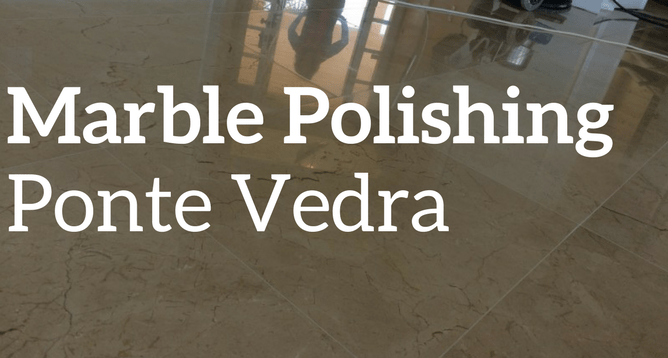
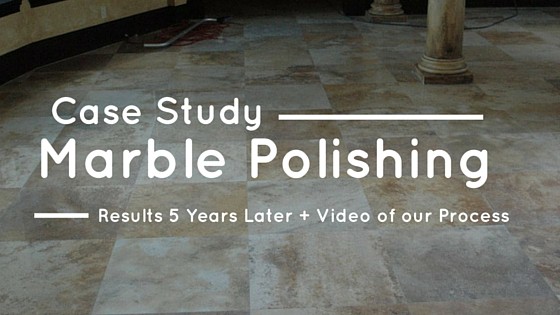
Polishing marble is necessary when a polish finish stone becomes scratched or etched to the point it becomes dull. The other reason marble requires polishing is if the customer has a stone that comes to him with a hone finish and he desires it to be polished. These are the only two reasons I can think of a stone should be polished. Refinishing to eliminate wear or changing the tiles from a hone to a polish. Some examples of polish finish stone are on our website.

Stone is available in two finishes: hone or polish. Polish is easy for most people to visualize — it is a shiny, glossy finish, and when viewed across a light source there will be a reflection. This is my definition of polish, I am sure there are others.

Hone finish is a bit harder for a customer to visualize. Honing is accomplished in two ways: with diamond or powder abrasives (there is another way, but lets just stick with the abrasives) These abrasives are available in different grits — from 30 to 3000. The hone finish will depend on the grit level of the process ends with. You cannot go to too high a grit level (usually over 220) or the stone will take on a polish look.

Which gets us back to the subject of polishing marble. Honing is a story for another day.

After the stone is taken through a grit progression (lets say 120,200,400,800) the stone will develop two things the stone expert looks for: clarity and depth of color. In the lower honing grits, the stone appears faded and white, with very little color. As the grit progression to the higher grits, detail in the stone (clarity) and color (depth of color) begins to return. As we approach the honing stage where the stone becomes recognizable again (all stone is different so this happens at different grits) we are getting ready to complete the final polish process.

There are several different final polishing methods available for marble. We sell one in our online store that is suitable for do it yourslefers. There are some applied dry and some applied wet. If the stone professional is experienced, they should be able to achieve a high gloss finish. The polish finish is accomplished through the use of heat and friction. One word of caution is not to allow a product called a crystalizer to be applied with a steel wool pad. This process will make it impossible to refinish in the future, unless more crystalizer is applied.

Upholstery Cleaning

Our upholstery cleaning system is based on one overarching concern: clean it deeply and get it dry fast. We accomplish this is a couple of ways. Click here for examples of our work.

Restoration by Fabric & Tile Master’s dry vacuums the furniture to remove dry soil. Just like we do when we clean carpet.

  1. After we vacuum thoroughly, we apply what we think is the finest pre-conditioner on the market. It is made by Chemspec, one of the cleaning industries oldest and most trusted chemical manufacturers. They also make our carpet pre-conditoiner. We apply this with a sprayer.
  2. After we have applied the pre-conditioner, we gently agitate the fabric with a white terry towel. This insures we have loosened as much soil as possible.
  3. We then extract the furniture with a machine that is made only for the expressed purpose of cleaning furniture. Most cleaners use a carpet cleaning machine that doubles as upholstery cleaning machine. The limitation of this process is that there can be too much water applied and too much suction. This could potentially over wet the furniture as well as apply too much suction potentially tearing it. Keeping a uniform temperature at the cleaning tool, as well as metering the proper chemicals is often not possible with these machines we use a machine that gives us low pressure (40psi), good heat (200 degrees) and lower suction because we don’t use so much water. This insures the upholstery is dry in about an hour.

Accreditation Logos
Marble Institute BBB