Fabric & Tile Masters
CALL TODAY 221-9550
1 Icon Hour Response 24 Icon Hour Service

Blog

Granite Counters

Granite is the perfect material for kitchen counter tops. The reasons for the stone’s suitability:

  1. Durability. Granite is virtually indestructible. If it is installed correctly, I can’t think of an interior finish that will outlast it.
  2. Unique colors and patterns. There are hundreds of varieties of marble available in colors that will match any interior finish.
  3. Affordability. Because of the current depressed builder market, there are some excellent deals available on granite counters. You still need to seek references and be sure you are hiring a company that knows what they are doing.

The following questions about granite are the main ones asked by homeowners:

Do we need to have the granite sealed every year?
The answer to this is usually no. If you test the granite to see. If it needs sealer (place a small amount of water on the stone and if it penetrates the stone and darkens the stone it needs a sealer) one application should be adequate for many years.

Does the granite need to be polished yearly?
Not really. Under normal circumstances, there are very few ways for granite to loose its polish finish. Under these circumstances it may become necessary to refinish using abrasive diamond disks.

The main thing I try to tell homeowners about granite is that there is one main substance that will ruin the counter. This is a common household cooking ingredient that even the best sealer will prevent for only a matter of hours. The threat to granite is ordinary cooking oil. It will penetrate and stain the stone, with little hope of removal. Sealers are great at providing a level of oil resistance, but over a matter of hours, the oil will penetrate.

Cleaning Olefin Carpet

Olefin is a popular material for manufactured carpet. Olefin is a synthetic fiber. It is made from petroleum byproducts. It is popular in broadloom carpet manufacture. Many homes have nylon in their bedrooms only to have an olefin in the family room.

These family room carpets are often Berber or loop (both even and uneven) and they are popular because of their bulk. Olefin as a fiber is the least expensive yarn in carpet production. This is where the bulk or increased face weight comes from. Because it is a cheaper fiber, it is attractive for home builders looking to save money and still provide a loop configuration.

The problem with olefin is in the way it is sold. For years it has been sold as a virtually indestructible. Carpet showroom employees typically mention to customers that olefin carpet can be cleaned with bleach. Let me be the first to say this is almost always a bad idea. The bleach simply adds oxygen to the spot and when used in excess can degrade the carpet backing and cause delamination. Moisture bypass to the backing is a real problem with olefin. Liquid go to the backing because the fiber holds no water.

Olefin is the most nonabsorbent fiber. Most fibers absorb a certain amount of water and this actually helps the cleaning process. Olefin has a specific gravity that is higher than water. If you cut off a piece of olefin and put it in a container of water it will float. More about this in a minute.

Because olefin is solution dyed (it has no fiber dye sites like nylon or wool) it has some stain resistant characteristics. Another equally important negative characteristic is that the fiber is oleophilic – it loves oil. And this is really the Achilles heel of the fiber as far as cleaning goes.

Couple the lipophilic nature of the fiber with the unabsorbency, and we have a real problem. Most carpet soil that can’t be removed with a vacuum cleaner are oxidized oils. If during the cleaning the cleaning technician over wets the carpet trying to remove the stain, the water will migrate back to the top during the drying process. The oily dried soil wicks back to the top and the carpet is rapidly re-soiled.

Cleaning olefin stains typically calls for using aggressive agitation at the carpet face coupled with a surfactant that is alkaline based.

200 Grit Polish?

This is a video test of attempted polishing after a 200 grit honing cut. This is significant in that marble is typically polished after a 400, 800 diamond honing pass that is usually at the end of a grit progression (120, 220, 400 polish for example) or sometimes even higher polishing grits of 1600 or 3500 grit.

The assumption is that the stone won’t polish after a 200 grit honing (in this video we went 50, 100 200 and followed this with 200 wet diamonds), however this video shows it is in fact possible. Are there any applications for this procedure in the real world? Who knows, but we did establish that a polish can be achieved!

Natural Stone Spalling

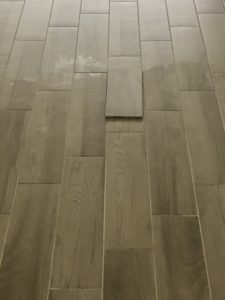
This is an example of grout being pressed back up onto the tile surface by water pressure from under the tile. The wet and drying cycle is causing the surface of the tile to disintegrate. This is referred to as spalling.

Grout Sealing

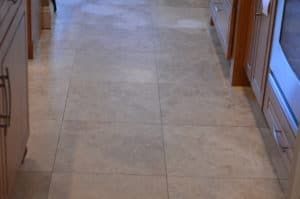
We seal grout on two occasions: after we finish cleaning a tile floor, and after a new floor is installed.

This is the important final step that provides the following: a level of oil and water repelency. If you spill some mustard on the tile, and you stop what you are doing and wipe it up, the sealer will give you a better chance of removing the stain than if there were no sealer present.

What the sealer will not do is keep the floor from getting dirty.

As you can see in this video, we go to a lot of trouble to be sure the grout is sealed completly and there is very little sealer residue on the tile.


Vacuuming Prior to Professional Carpet Cleaning

Why should the carpet be vacuumed prior to professional cleaning? If you have your carpet cleaned professionally, you will not have your carpet vacuumed unless you vacuum yourself.

The need for dry vacuuming is well documented and recognized in various industry guidelines including the IICRC carpet cleaning standard S100. The reason — vacuuming the carpet before cleaning is one that has been proven as well as making good common sense. Because most cleaning methods use water at some point to remove suspended soils, it is recommended as much dry soil should be removed as possible before introduction of moisture.

Dry soils include: sand (and other dry soils like clay and feldspar), human and pet hair and skin, and dust. These types of soil are best removed when dry. The correct type of vacuum – one that has a separate motor for the beater bar and the vacuum bag – will separate the carpet fibers and remove these soil.

The beater bar is key here, because the steam cleaner wand or other cleaning device is not designed to separate fibers to remove dry soil. The steam cleaner wand has a slot that glides over the carpet spraying a mist of (hopefully) hot water followed by a vacuum slot. Typically the cleaner applies a water based traffic lane cleaner before this step, so if there is no dry vacuuming before this step, you can pretty much count on the fact you are getting a substandard (remember IICRC S100) cleaning job.

The typical carpet cleaning machine (no matter how large they are) is in reality an enlarged canister vacuum with a water supply. Once this canister vacuum squirts water on the carpet, the ability to remove dry soils is compromised. As I mentioned before this is as much a commonsense argument as it is scientific, and if you think about it, when you get hair wet, it will adhere to another fiber more readily.

If you ask a carpet cleaning technician, they will give you a party line “our units are so powerful that we don’t need to vacuum”. This is repeated many time each day to customers that want to know – deservedly – shouldn’t their carpet be vacuumed first? Trust your instincts on this.

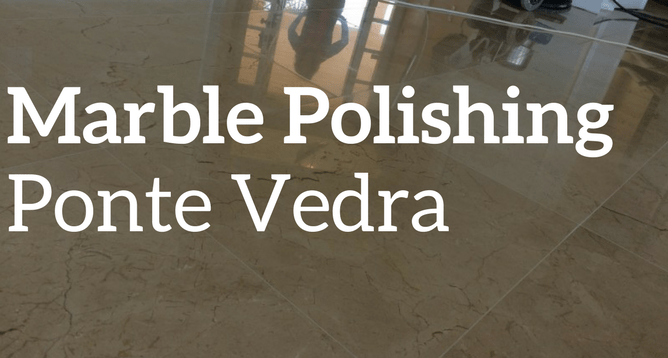
Marble Polishing After 400g Honing Cut

This is a video, produced by Sally Edenfield, in which she shows a honing grit progression on a 12×12 from 100-400g. The marble is Breccia Oniciata.

Production values were low due primarily to director shortcuts.

These dry diamonds are unique in that they only work on stone other than true geological marble. If you are honing a verticle surface they are great because you don’t have to let your work dry between cuts. A full set is about $250. They are available (3′) from MB Stone, as is the MB12 polishing powder.  I am a customer and friend of MB Stone.

Guest Article: Re-Crystallization (Revisited)

This article is reprinted with permission of the author. A discussion of how crystallizers that are applied as a matter of course to stone floors, is not a recommended practice.

By Frederick M. Hueston PhD
www.stoneforensics.com
www.GoDrFred.com

The following is a reprint of an article I wrote back in 1990. I have edited some of the text to bring it up to date. My opinion on this process is still the same as it was in 1990. With that said there are some uses for this process, however care must be exercised in its use. Most of the damage I have seen since 1990 by this process results from the overuse of the product as well as the lack of trained personnel who apply it. The following reprint should give you some useful information on this process and the care that must be used when using it. In addition keep in mind that the chemicals contained in this process are not sustainable(Green) and can be extremely harmful to the user as well as occupants of the building it is used in.

RE-CRYSTALLIZATION

To answer the problems experienced by customers who had dull and scratched marble. I tried to find the best and most practical solution to the restoration of their marble floors, walls, etc.

Since this is a relatively small industry, there weren’t too many good sources. I did find some self-proclaimed “experts” who introduced me to the idea of “re-crystallization” as a safe and easy method of restoring and polishing marble and stone. They touted it as a time proven process which had its roots in the marble industry in Europe. It was alleged to be safe, easy to apply and was both slip resistant and permanent. In short, it was the perfect solution for most marble restoration and maintenance problems.

Having been raised in the “old” school, I instinctively doubt anything that appears “too good to be true”. Experience has taught me that most of those “too good to be true statements” usually turn out to be exactly that!

My business reputation is at stake whenever I recommend or use a product or procedure. I don’t take that responsibility lightly. So, I endeavored to get answers to some specific questions about this “re-crystallization” process (from the systems’ promoters).

Question #1. Does the “re-crystallization” process contain waxes?
Crystallization Answer: No.

Question #2. Does the process allow the stone to breath (transpire)?
Crystallization Answer: Vague generalizations and evasive replicas.

Question #3. How does “re-crystallization” react with stone?
Crystallization Answer: Evasive generalizations.

These evasive non-answers surprised me. Perhaps there was something that these crystallization “experts” did not know—or did not want me to know.

Though I am in stone consultation business, my formal education is in Chemistry. I had a natural curiosity about this wondrous process called “re-crystallization”. After all, if it worked, it would be great for my business. I determined to do some research on my own.

Following is a summary of my research:

Read more »

Removing Grout & Regrouting

MB12 “Polish at 200g”

This is a copy of the file that mentions MB12 polishing powder will work after a 200 grit honing cut on most marbles. If you click on the image it will enlarge so you can see the highlighted text.


Harry Edenfield owns Restoration by Fabric & Tile Masters in Jacksonville Florida. Harry also authors the FabricMasters Blog, where he offers information on a variety of topics related to stone counter tops, carpet cleaning, upholstery, porcelain and ceramic tiles, water damage restoration and mold removal. Harry is also a member of the IICRC, the Marble Institute of America, and is an Accredited Member of the Better Business Bureau of Northeast Florida.


Accreditation Logos
Marble Institute BBB